Breaker Tripping in Englewood: Overload, Fault, or a Tired Breaker?
Breakers trip for three reasons, and the reason is the repair. Overload: the circuit is asked for more than its rating, classically a space heater and a hair dryer discovering each other; the fix is load management or a new circuit, not a bigger breaker, because the wire in the wall is the rating that matters. Fault: a short or a ground leak, reported by instant tripping. Wear: the breaker itself, which confesses by tripping under light load or feeling warm.
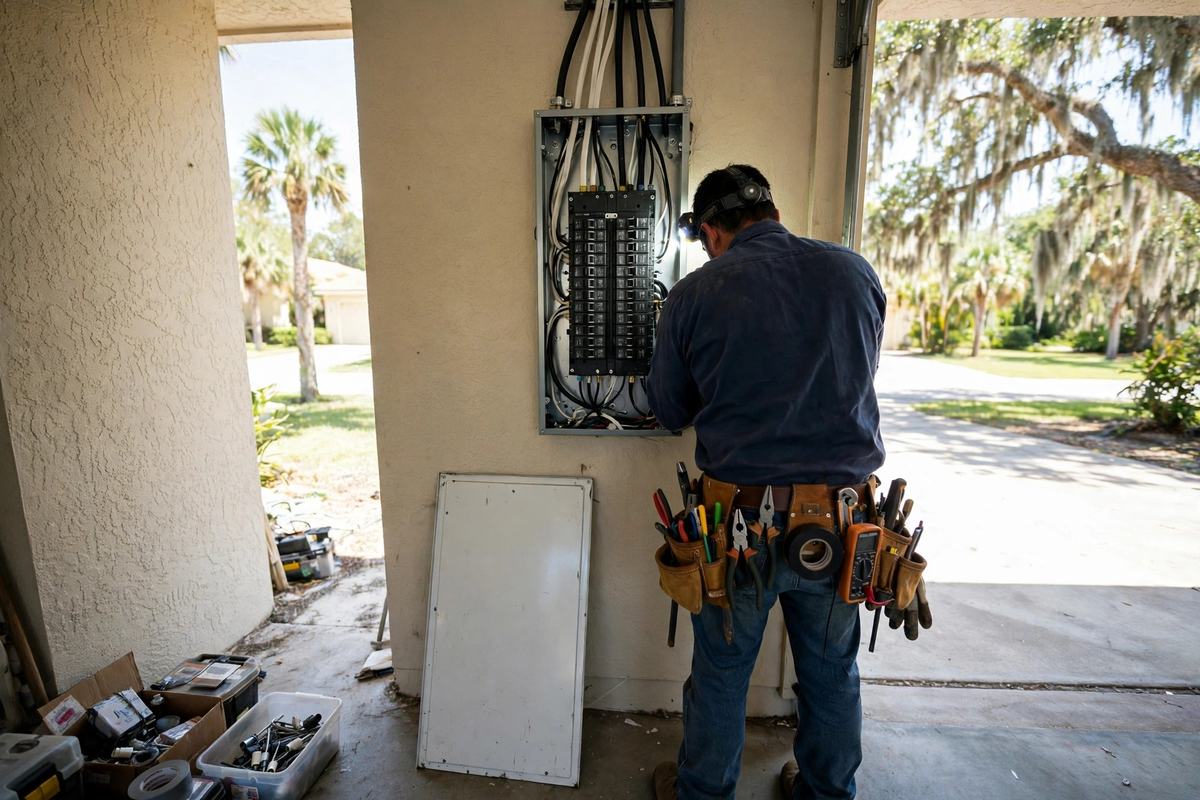
In Englewood, a tripping breaker has a local first suspect list: a corroded connection heating under load, a GFCI reporting real moisture, a panel from the flagged era doing what it is known for. This guide reads the patterns in the order a local electrician checks them.
The safe home tests are few and they end early: unplug everything on the circuit, reset, and add loads back one at a time. If it trips empty, stop testing; the fault is in the wiring or the breaker, and both are a technician's meter work. Note which appliances were running at the trip; that list is half the diagnosis and the technician will ask for it.
What never to do: hold a breaker on, tape it, or swap in a larger breaker to stop the nuisance. The tripping is the protection working. Every electrical fire investigation that starts with a defeated breaker ends the same way, and the breaker was the cheapest part of the house it was protecting.
Request a callback
Prefer to talk later? Leave your details and an independent local pro will call you back. No charge to you, no obligation.
Lemon Bay Electric is a free referral service. Submitting this form connects you with independent local contractors who provide the work.